The same bad ritual every morning: open a chat window, explain your brand for the 47th time, watch the AI nod and forget by tomorrow.
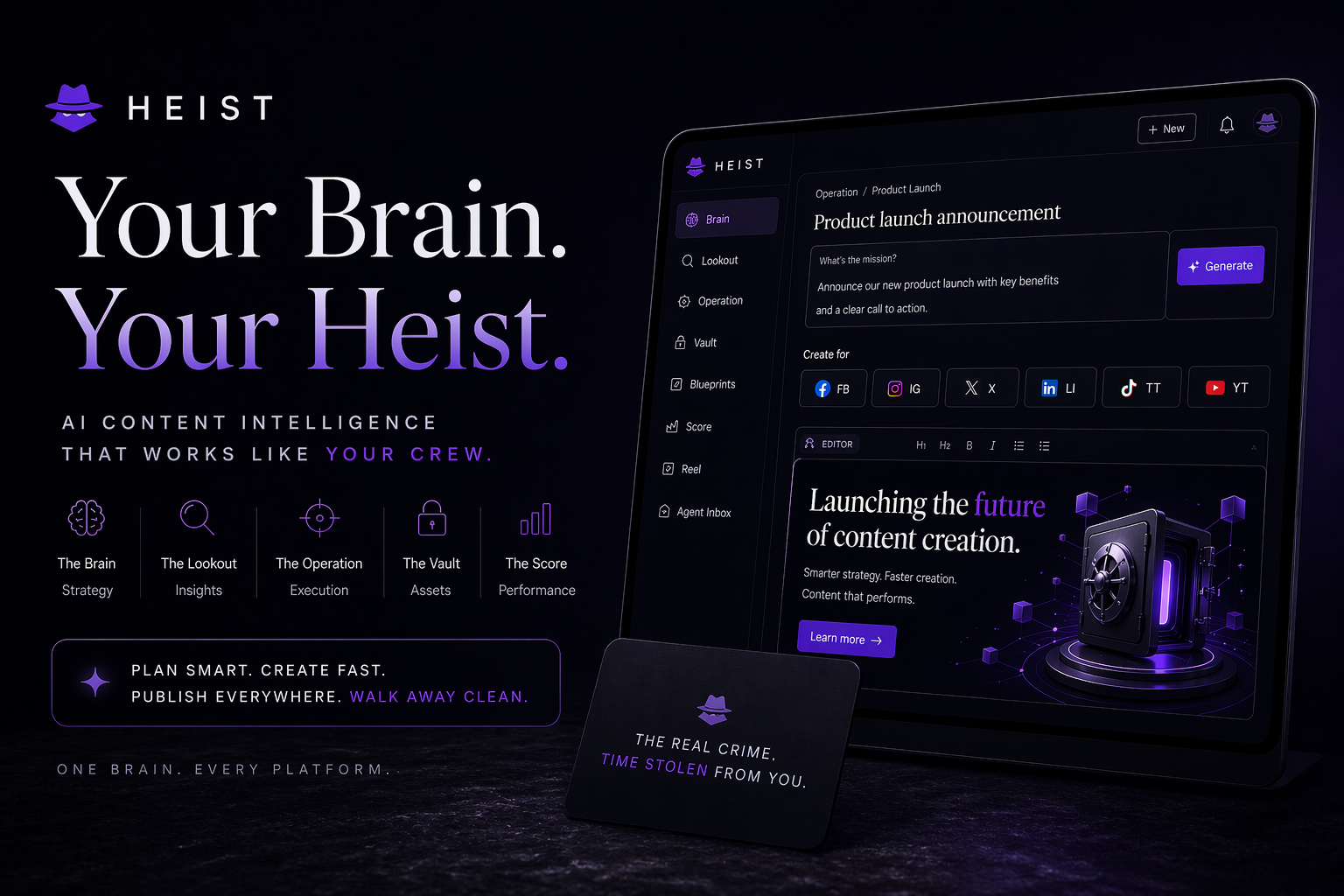
Most AI content tools have one layer of context: the prompt you just typed. When the session closes, so does their understanding of you. Heist's Brain has ten layers that survive every session. That's not more features — it's a different architecture.
The one-shot model is broken
The default AI tool is a blank box. You type, it generates, session ends, memory dies. Every Monday you're re-explaining your brand to the same tool that forgot you on Friday.
That's not laziness on your part. That's the product being structurally forgetful. The model isn't designed to carry context between sessions — it's designed to carry ~8,000 tokens and then discard them.
What a Brain does instead
A Brain is persistent memory with structure. Not one field — ten. Each captures a different dimension:
- Brand Profile, Audience Personas, Voice Fingerprint
- Knowledge Base, Memory Facts, Anti-Repetition Log
- Performance Patterns, Smart Onboarding
- Voice Drift Detection, Engagement Signals
Why ten beats one
Adding layers is not incremental. Performance Patterns means nothing without Audience Personas. Voice Drift Detection means nothing without a Voice Fingerprint to drift from.
Stack them and output compounds. Your Tuesday caption knows what worked on Monday. Your Friday reel learns from Wednesday's top performer.
One layer is a chatbox. Ten layers is a colleague who's been paying attention since day one.
The test that matters
Open your current AI tool. Ask it what your top-performing post was last month. If it can't answer, it doesn't have a memory. It has a prompt.
Steal your time back.
Heist is the AI Content OS that replaces your stack with one Brain that remembers, learns, and gets sharper with every post. Free 7-day trial, no credit card.
Get Your Time Back →